

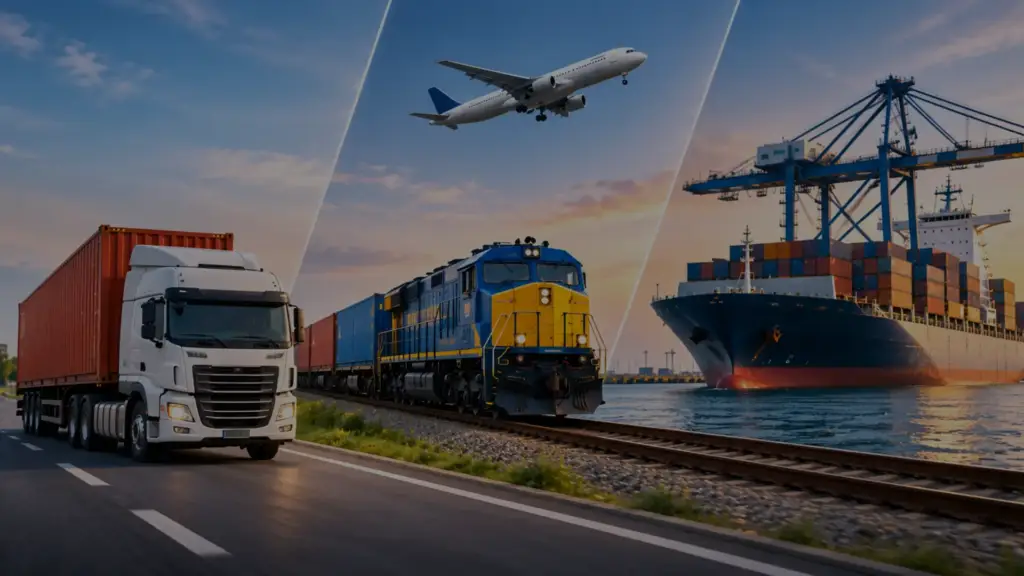
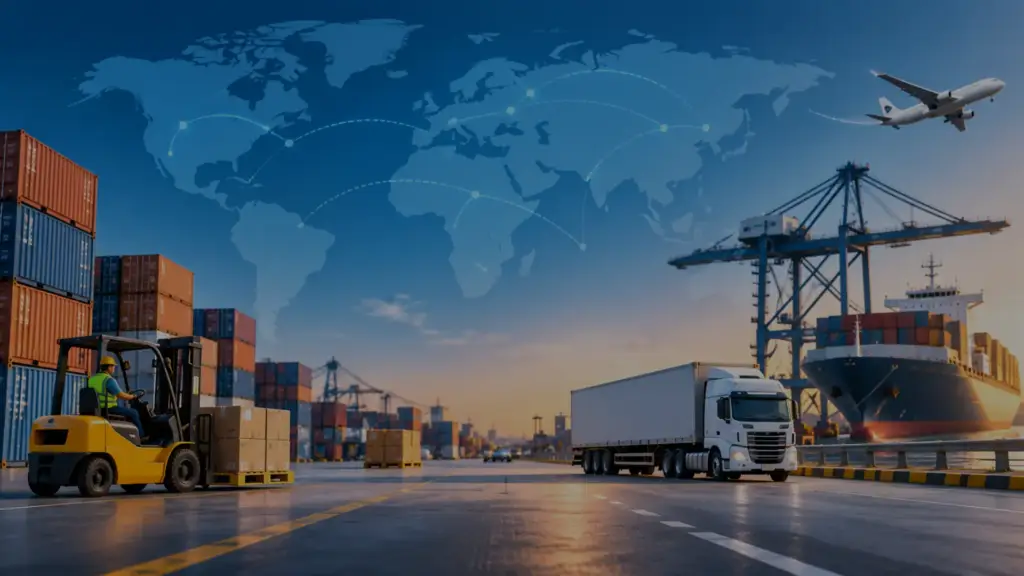
Multimodal transportation is the movement of goods using two or more modes of transport, such as road, rail, inland waterways, sea, or air, under a single contract issued by one operator who takes responsibility for the entire journey.
The defining feature is the contract, not the number of modes. One operator, one transport document, and one party answerable for the cargo from origin to destination, even where other carriers physically perform individual legs.
In India, multimodal transportation involving a leg outside the country is governed by the Multimodal Transportation of Goods Act, 1993, which requires operators to register as a Multimodal Transport Operator (MTO), prescribes the contents of the multimodal transport document, and sets out the operator’s liability for loss, damage, or delay.
Importance of Multimodal Transportation
Most long-distance freight in India already crosses modes. The question is whether the shipper manages those transitions itself or buys them as one service.
- Single point of accountability: With one contract, cargo loss or damage is the operator’s liability. With separate contracts, the shipper has to establish which leg the loss occurred on before anyone accepts responsibility, and handover points are exactly where damage is hardest to attribute.
- Cost: Combining modes allows the long-haul leg to move on the cheapest suitable mode, usually rail or sea, with road used only for first and last mile. Road-only movement over long distances is typically the most expensive option per tonne-kilometre.
- Administrative simplicity: One booking, one document, one invoice, one party to chase, instead of coordinating carriers, bookings, and paperwork for each leg.
- Emissions: Shifting long-haul freight from road to rail or waterways materially lowers emissions per tonne-kilometre, which matters for shippers with reporting obligations.
- Capacity access: An operator with rail and port relationships can secure space that an individual shipper cannot.
- Reach: Combining modes serves destinations that no single mode reaches economically, particularly inland locations far from ports.
The trade-off is control and transit time. Each mode change requires handling and dwell time at a terminal, and the shipper gives up direct management of the legs.
Process of Multimodal Transportation
A typical export movement runs as follows:
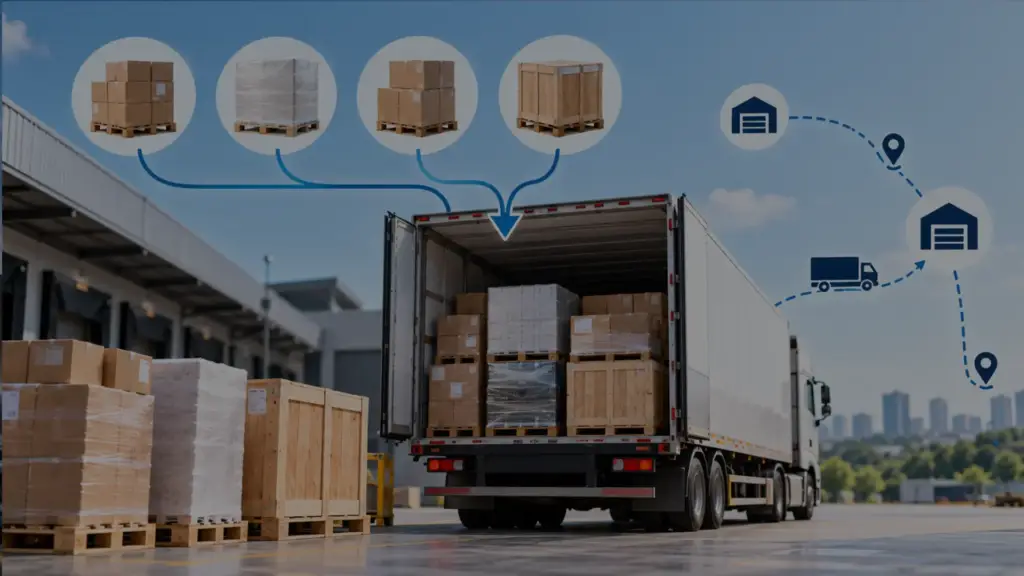
- First mile (road): The container is collected from the shipper’s premises by truck and taken to an inland container depot or rail terminal.
- Long haul (rail): The container moves by rail to a port, which is normally the cheapest leg per tonne-kilometre over long distances.
- Port handling and documentation: The container is handled at the terminal and customs formalities are completed.
- Main leg (sea): The container is shipped to the destination port.
- Last mile (road or rail): The container moves inland to the consignee.
The MTO arranges and is liable for all of it, under one multimodal transport document, whether or not it owns the trucks, wagons, or vessels involved.
Multimodal compared with intermodal
The two terms are frequently confused, and the distinction is commercial rather than physical.
| Multimodal | Intermodal | |
|---|---|---|
| Contracts | One, with one operator | Separate contract per leg |
| Liability | One operator liable end to end | Each carrier liable for its own leg only |
| Documentation | Single multimodal transport document | A document per carrier |
| Coordination | Operator plans legs and handovers | Shipper or its logistics team coordinates |
| Shipper effort | Low | High |
| Control over legs | Operator chooses carriers | Shipper selects each carrier |
Physically, both can involve exactly the same truck, train, and ship. What differs is who carries the contractual risk at each handover.
Key Components of Multimodal Transport
- Multimodal Transport Operator (MTO): The party contracting for the whole movement and bearing liability for it. In India, an MTO must be registered under the 1993 Act for movements from India to a destination outside India.
- Multimodal transport document (MTD): The single document evidencing the contract and the receipt of goods, with contents prescribed by the Act.
- Containerisation: Standard containers are what make mode transfer practical, since the unit moves between modes without the goods being rehandled.
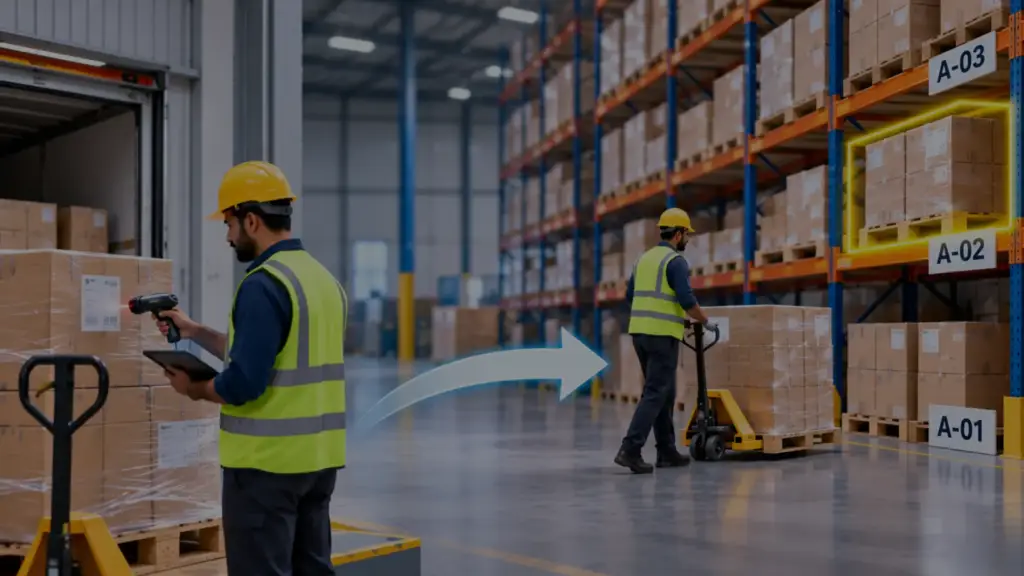
- Transhipment points: Inland container depots, container freight stations, rail terminals, and ports where mode changes occur.
- Customs clearance: Handled at the designated point in the chain, often at an inland depot rather than at the port.
- Liability regime: The operator’s liability for loss, damage, or delay, subject to the limits set out in the governing law or contract.
Examples of Multimodal Transportation
A ceramic tile manufacturer in Morbi ships containers to a buyer in Chennai. Under an intermodal arrangement, it would book a road carrier to the rail terminal, a rail service for the long haul, and a second road carrier for delivery in Chennai. Three contracts, three sets of documents, and three parties. If tiles arrive broken, each carrier can reasonably point to the handovers either side of its own leg, and the shipper has to prove where the damage occurred.
Under a multimodal arrangement, it books one MTO. The same trucks and the same train may well perform the movement, but the MTO issues one transport document, coordinates the handovers at both terminals, and is liable for the cargo throughout. A damage claim goes to one party.
The manufacturer pays a margin for that coordination and accepts less say in which carriers are used. For a business shipping regularly and without a logistics team to manage carriers leg by leg, that is usually the better trade.
Related Terms
- Intermodal Transportation
- Full Truckload (FTL)
- Less Than Truckload (LTL)
- Part Truckload (PTL)
- Freight Consolidation
- Line Haul
- Drayage
- Third-Party Logistics (3PL)
Join The Community
Recent Glossary
FAQs
Q1. What is the difference between multimodal and intermodal transportation?
Multimodal uses one contract with one operator liable for the whole journey. Intermodal uses separate contracts, with each carrier liable only for its own leg. The physical movement can be identical.
Q2. Does multimodal transportation require containers?
Not strictly, but containerisation is what makes it efficient, because the cargo transfers between modes as a sealed unit without being rehandled.
Q3. Who is a Multimodal Transport Operator?
The party that contracts to perform the whole multimodal movement and accepts liability for it. In India, registration as an MTO is required under the Multimodal Transportation of Goods Act, 1993, for movements from India to a place outside India.
Q4. Is multimodal always cheaper than road?
Not always. It is usually cheaper over longer distances, where the savings on the rail or sea leg outweigh the cost of two mode transfers. Over short distances, direct road movement is normally both cheaper and faster.