
The automobile supply chain is unlike any other. Over 20,000 different parts to manufacture one truck or one bus. Your product doesn’t fit in a container. Complex regulations to move the finished product. And when global shipping lanes get disrupted, the manufacturing is disrupted.
In this edition of the Supply Chain Growth Hub, we sat down with Pravin Nerpagar, Deputy General Manager – Supply Chain at Tata Motors, with over 20+ years of experience in supply chain management to understand the realities of managing finished goods logistics across 20+ countries, the ground-level truth about AI adoption in Indian supply chains, and what resilience really means in a world where challenges are the new normal.
Q: Give us a picture of the complexity of the automobile supply chain — particularly the finished goods side.
Our product is the truck or the bus itself. Other companies’ products travel inside a truck, but our product is the truck. So that changes everything.
We manufacture from seven big manufacturing plants and 9–10 third-party manufacturers, and ship from 3–4 different locations in India. We export to 20+ countries in different forms — direct shipments, chassis shipments, complete bus body units, special application vehicles like transit mixers, tippers, containers. We also manage land exports to landlocked countries like Nepal, Bhutan, and Bangladesh.
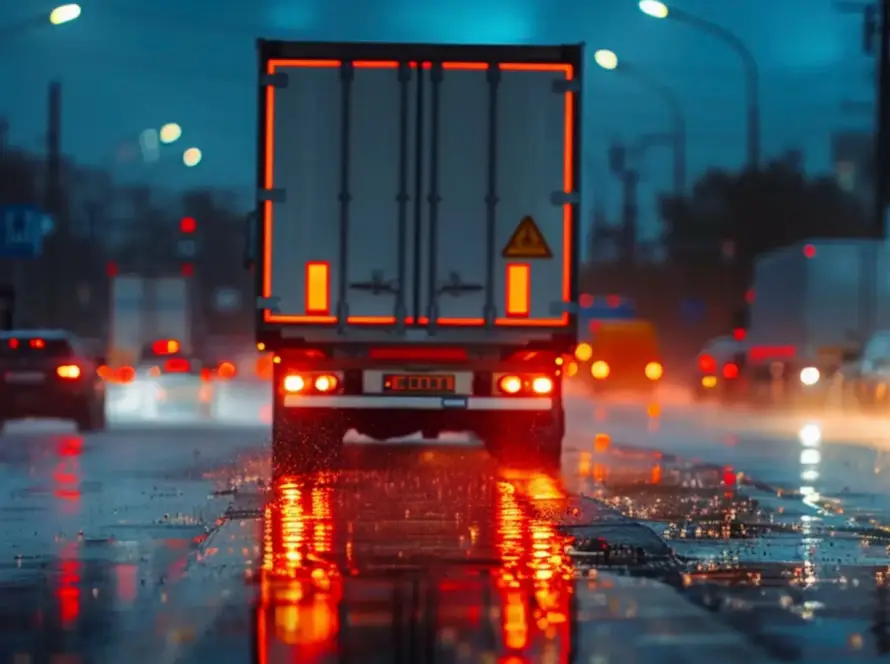
The big challenge with finished vehicle logistics is that our products cannot fit into a container. So we need specialised vessels called RoRo (Roll-on Roll-off) vessels — these are dedicated automobile export vessels. The vessel operators are a very niche and limited pool, so the opportunity to negotiate costs and vessel availability for specific destinations is itself a challenge.
And that is just the outbound side. On the inbound side, there is a spare parts supply chain for manufacturing — over 20,000 different parts to manufacture one truck or one bus, sourced from exclusive and common vendors, with Tier 2, Tier 3, Tier 4 suppliers behind each of them. If you map the entire transportation network, it is like a game of puzzle. Only when you put everything together can you assemble it or manage it.
Q: What are the specific challenges of moving finished vehicles within India?
The challenges are unique. When you want to transport a large bus from, say, Jamshedpur to Mumbai port, it travels by road. But unlike a car that can come in a carrier truck, our product is the truck. For smaller commercial vehicles, you can use a big cot or chassis-on-truck concept where three to four small trucks ride on a bigger truck. But even that has a lot of restrictions.
There are no-entry zones — in some cities, trucks and buses are not allowed during the day. Time limitations and entry restrictions significantly impact deliveries. Most roads other than National Highways have limitations for commercial vehicles. Driver facilities are also very poor.
Additionally, the regulatory framework for vehicles manufactured for export is unclear. These vehicles may be BS2, BS3, or BS4 (below India’s current BS6 emission norms), so we need temporary registrations and additional permissions from government agencies to move them on Indian roads — sometimes for 30 days, sometimes 20 days. Every time, we have to explain to the authorities why it is required. Clear rules and regulations are not in place for this.
Subscribe to Growth Hub for more in-depth industry leader interviews.
Q: How are you seeing AI actually get implemented in supply chain on the ground in India?
Honestly, we are talking a lot about AI but it is not completely there yet. Tracking tools are getting implemented in many places, but when it comes to actual productivity improvement, the real use cases are very, very less compared to all the talk that is happening.
In our company, AI has improved the entire production planning system. Forecast accuracy, ordering management, data dashboards, reports — many things are being managed better with the help of AI.
Q: What is your advice to young supply chain professionals?
Always keep your plan B ready. Try to design your supply chains to be as resilient as possible, rather than as efficient as possible. And work more on your relationships than on the processes. Processes might help you improve efficiency, but strong relationships will save the company — save millions of dollars — when challenging situations arise.
Do not be dependent on one lane, one port, one location, one supplier, one destination. Always have multiple plans to keep running.
Being flexible and resilient is the new normal. There is no day that will come to you without a challenge. So stay innovative, stay creative, and be flexible enough to find alternatives and solutions — immediately, not later.