
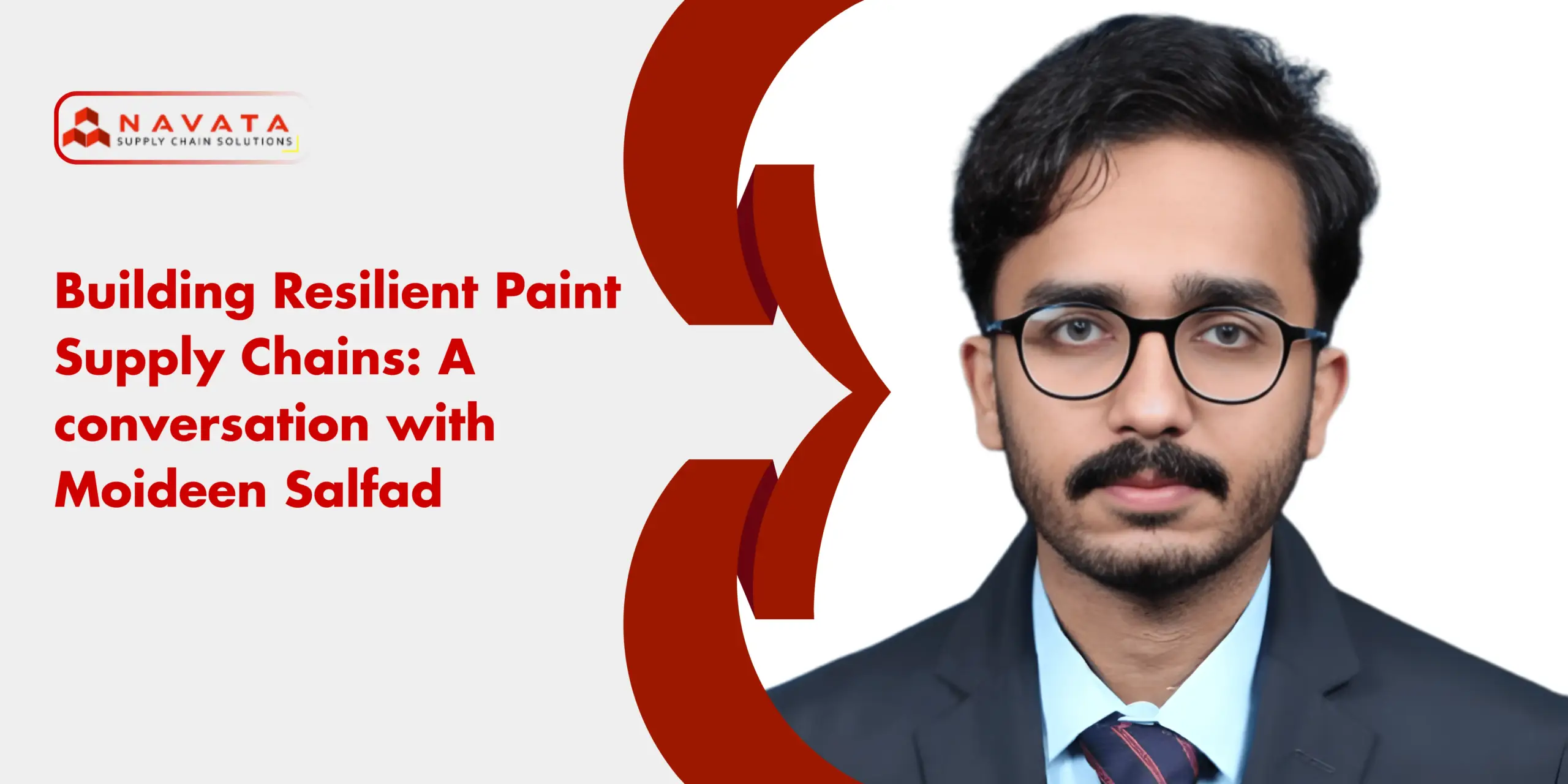
Moideen Salfad is an Assistant General Manager – Procurement at JSW Paints, with close to four years of experience across supply chain operations, distribution, and raw material sourcing. An alumnus of IIM Indore, Moideen has worked extensively in procurement for both industrial coatings and decorative paints—categories known for their high complexity and volatility.
In this conversation with The Supply Chain Growth Hub, Moideen shares insights from ranging from managing procurement for over 200 raw materials, navigating global supply disruptions like the Red Sea crisis, driving digital transformation in sourcing, and his perspective on the future of India’s supply chain ecosystem.
Q: Can you explain your current role in simple terms for someone new to supply chain?
At a very fundamental level, procurement ensures that the right raw materials reach manufacturing plants at the right time, in the right quantity, and at the right price. In paints, this becomes particularly complex because we deal with over 200 different raw materials across categories.
My role directly impacts two critical things:
- Cost, which affects the company’s EBITDA
- Availability, which affects service levels and production continuity
Q: Paints are known to be a complex category. What makes procurement challenging here?
Paint manufacturing involves a wide variety of chemicals—many of which are derived from crude oil. Prices are highly volatile and influenced by global crude movements, geopolitics, exchange rates, logistics disruptions, and demand-supply dynamics.
As a procurement professional, you constantly need to track macroeconomic indicators, geopolitical events – all of which will affect the cost as well as the risk involved in sourcing. For example, when the Russia–Ukraine war began, raw material prices from the European market increased, as Europe was heavily dependent on Russia for its energy needs.
All of this complexity is what makes the role challenging—but also very exciting.
Subscribe to Growth Hub for more in-depth industry leader interviews.
Q: Was there any significant disruption you managed during your career?
The Red Sea crisis was a significant disruption. Shipping routes were diverted around South Africa, increasing lead times from 60–90 days to over 120 days in some cases.
Our response focused on risk diversification:
- Reducing dependence on Europe and the US
- Exploring alternative sourcing from south east asia.
- Increasing inventory buffers by working with third-party logistics warehouse providers
We also made sure that we actively communicated with our clients regarding manufacturing delays. They were understanding, as this was a global crisis.
Q: You mentioned digital transformation in procurement. What was the biggest challenge while executing it?
Earlier, sourcing was heavily Excel-driven and manual. This led to inefficiencies, errors, and lack of transparency. We implemented a centralized digital sourcing platform where requirements are posted, suppliers bid within defined timelines, and contracts are automatically triggered based on outcomes.
The biggest challenge wasn’t technology—it was people’s adoption. Both internal teams and vendors were initially resistant.
Internally, we addressed this by identifying champions within each team, assigning them clear milestones related to technology implementation, and conducting monthly reviews. This created a healthy sense of competition within the organization.
On the vendor side, some had already adopted similar technologies and were quick to adapt. Others were supported through training sessions conducted with the help of third-party vendors.
It took over three months, but after some initial quick wins, adoption speeded up.
Q: Why do you believe India’s position in the global supply chain is improving?
Two major reasons:
- Strong domestic demand, even when global markets slow down
- China+1 strategy, where global companies are actively diversifying manufacturing into India
India also has a cost advantage, skilled human capital, and growing manufacturing capabilities. These factors make the supply chain space in India both challenging and full of opportunity.
Q: What advice would you give young professionals considering a career in supply chain?
Supply chain is ideal for those who enjoy problem-solving and are curious about how the world works—from geopolitics to macroeconomics to technology. Every day brings new challenges, whether it’s a demand shock, supply disruption, or price volatility.
If you also have an interest in technology, supply chain offers immense scope to apply digital solutions to real-world problems. It’s a demanding career, but a deeply rewarding one.